A few days in Stockholm
The Vasa Museum, home to a 17th-century warship that sank minutes after setting sail and survives almost intact today, a walk around the island of Kungsholmen and another along the shore of Edsviken bay.
You step into the museum hall and there it is, in the half-light, bigger than you ever imagined: the Vasa, a warship from 1628 that you can take in from bow to stern, almost as it was on the day it was launched.
A ship for a king
In the early 17th century Sweden was at war in the Baltic, and King Gustavus Adolphus wanted a fleet to impress. In 1625 he ordered the Vasa from the Stockholm shipyard: almost 70 metres long, a mainmast of about 50 metres, 64 guns on two decks and hundreds of carved, brightly painted sculptures (lions, Roman emperors, mermaids) proclaiming the king’s power.
Twenty minutes of glory
On 10 August 1628 it set off on its maiden voyage, watched by half of Stockholm. It had sailed only about 1,300 metres when a gust of wind heeled it over; water poured in through the gunports, open to fire the salute, and the ship sank right there in the harbour. Around thirty people died. The inquiry found no one to blame: the Vasa was simply too tall and top-heavy, with too little ballast to hold it upright.
333 years underwater
In the decades that followed almost all the guns were salvaged with a diving bell, and then the ship was forgotten. The Baltic saved it: cold, brackish water, free of the shipworm that eats wood in other seas. In 1956 researcher Anders Franzén found it on the harbour floor, and on 24 April 1961 the Vasa broke the surface again after 333 years.
From salvage to museum
Raising it was only the start. For seventeen years it was sprayed with polyethylene glycol so the wood would not crack as it dried, while it was shown in a temporary museum. In 1990 the current museum opened on the island of Djurgården, built around the ship, and today it is one of the most visited museums in Scandinavia. Over 95% of what you see is original.
Walking around it on several levels of galleries, from the keel to the top of the carved stern, feels like looking into a frozen moment of the 17th century.
A walk around Kungsholmen
Another day we set off from the Central Station and crossed the bridge to Kungsholmen, the island on the western side of central Stockholm. Our first stop was City Hall (Stadshuset), the great red-brick building whose tower is crowned with three golden crowns, built between 1911 and 1923 to a design by Ragnar Östberg and the venue for the Nobel Prize banquet every December. From its courtyard and waterside gardens you look across the Riddarfjärden bay to the skyline of the old town.
We carried on along Norr Mälarstrand, the lakeside promenade with its moored boats and early 20th-century façades, to Rålambshovsparken park and the shore at Smedsudden. From there the path climbs through pines and rocks to viewpoints over Lake Mälaren, before heading back through the streets of the neighbourhood. The video below sums up the walk.
A walk around Edsviken bay
Another day, with the first snow on the ground, we walked along the shore of Edsviken, a long inlet of the Baltic north of the city. The path drops between wooden and brick houses to the water and follows the reeds, the small wooden jetties and a pine wood that looks out over the bay.
Further on we passed an old manor house with a yellow façade, its courtyard and garden open to the water, and a viewpoint with wooden steps facing the far shore. We warmed up in a café before heading back along the park path, under trees already bare. The second video below sums up the walk.
A walk around Kungsholmen
A walk around Edsviken bay
Photos
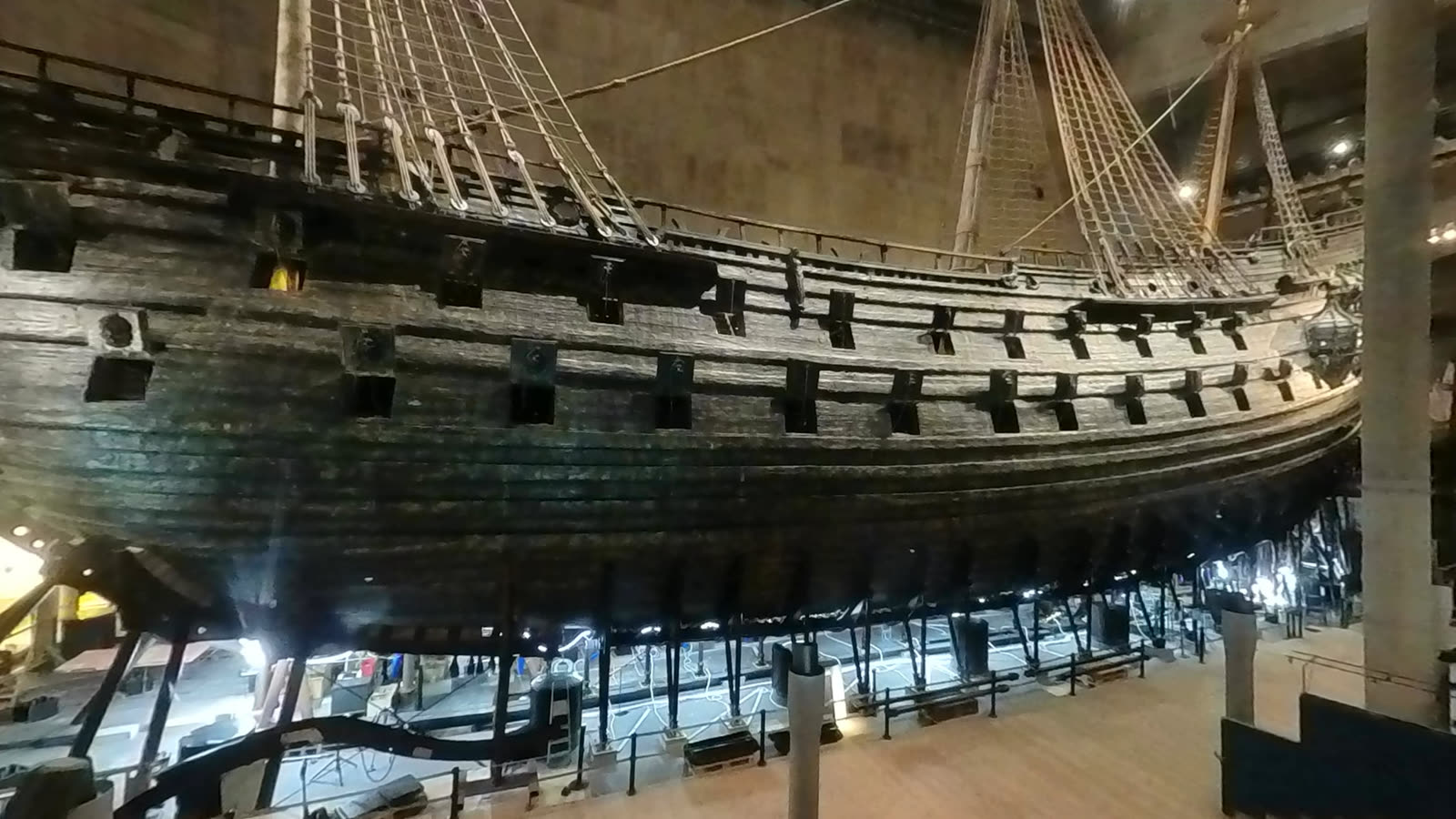
The Vasa's hull, almost 70 metres of oak that spent 333 years underwater. 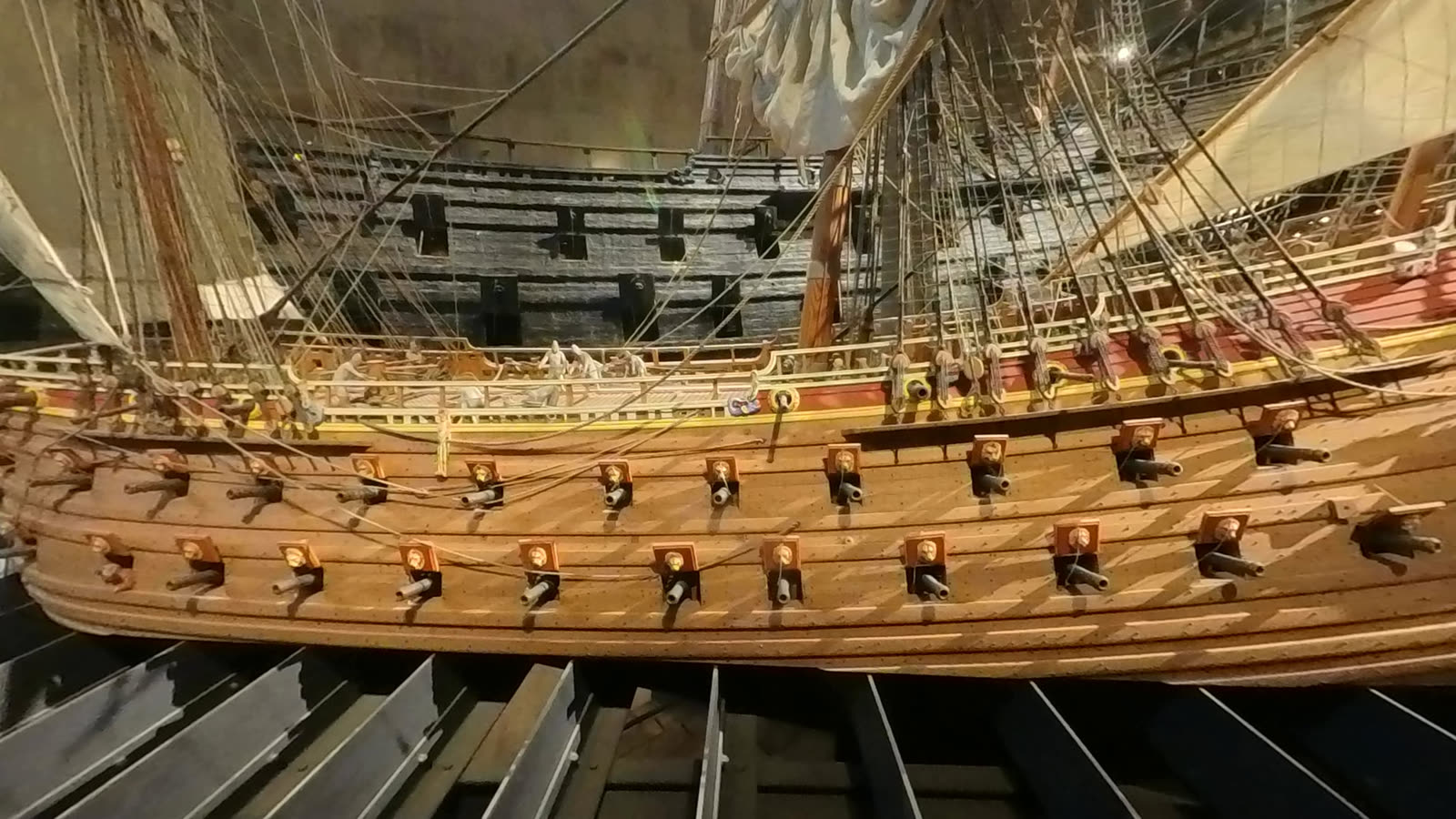
The scale model shows the ship on launch day, in its full colours. 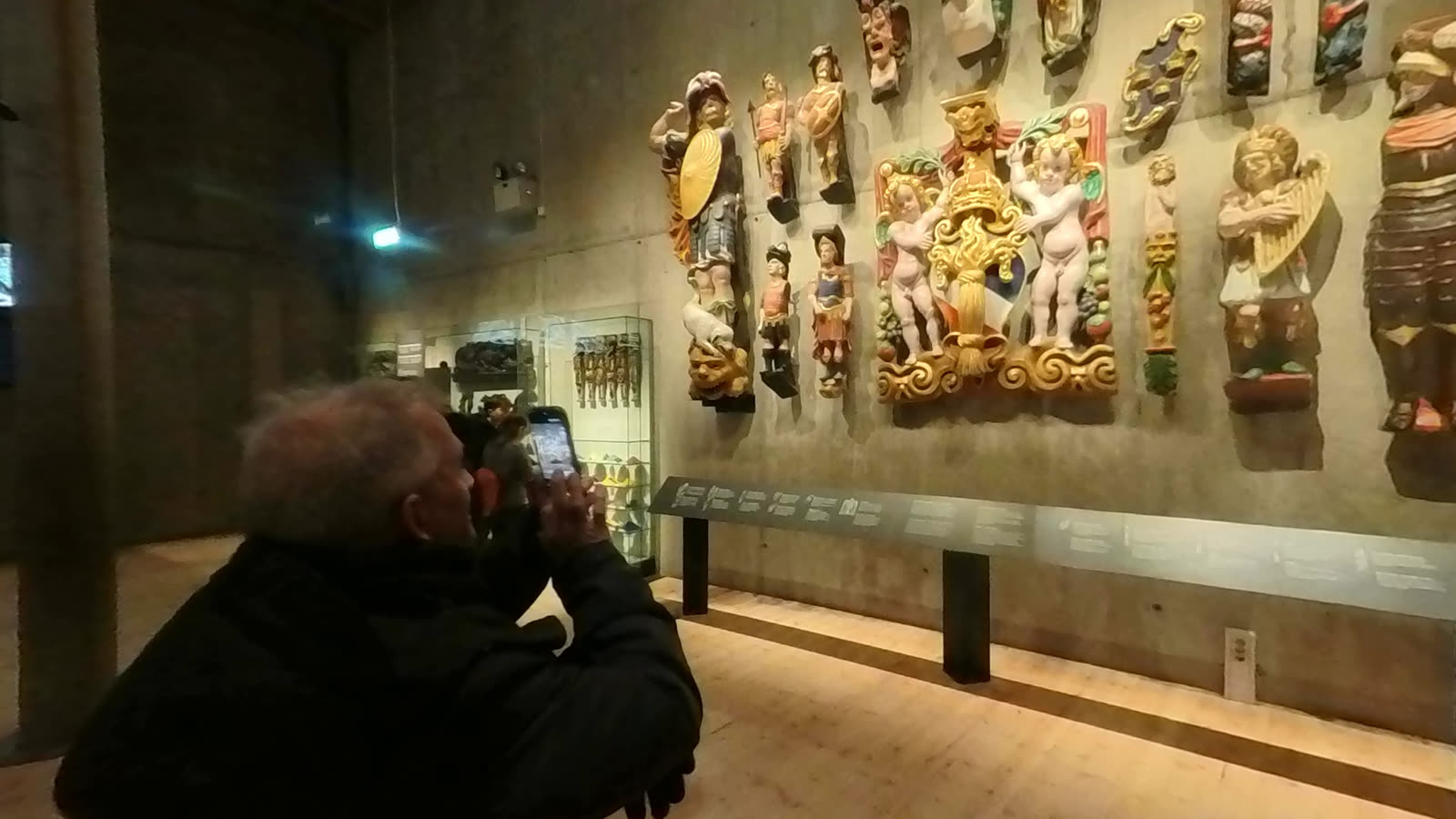
Carved sculptures from the ship, painted in the colours they are thought to have had. 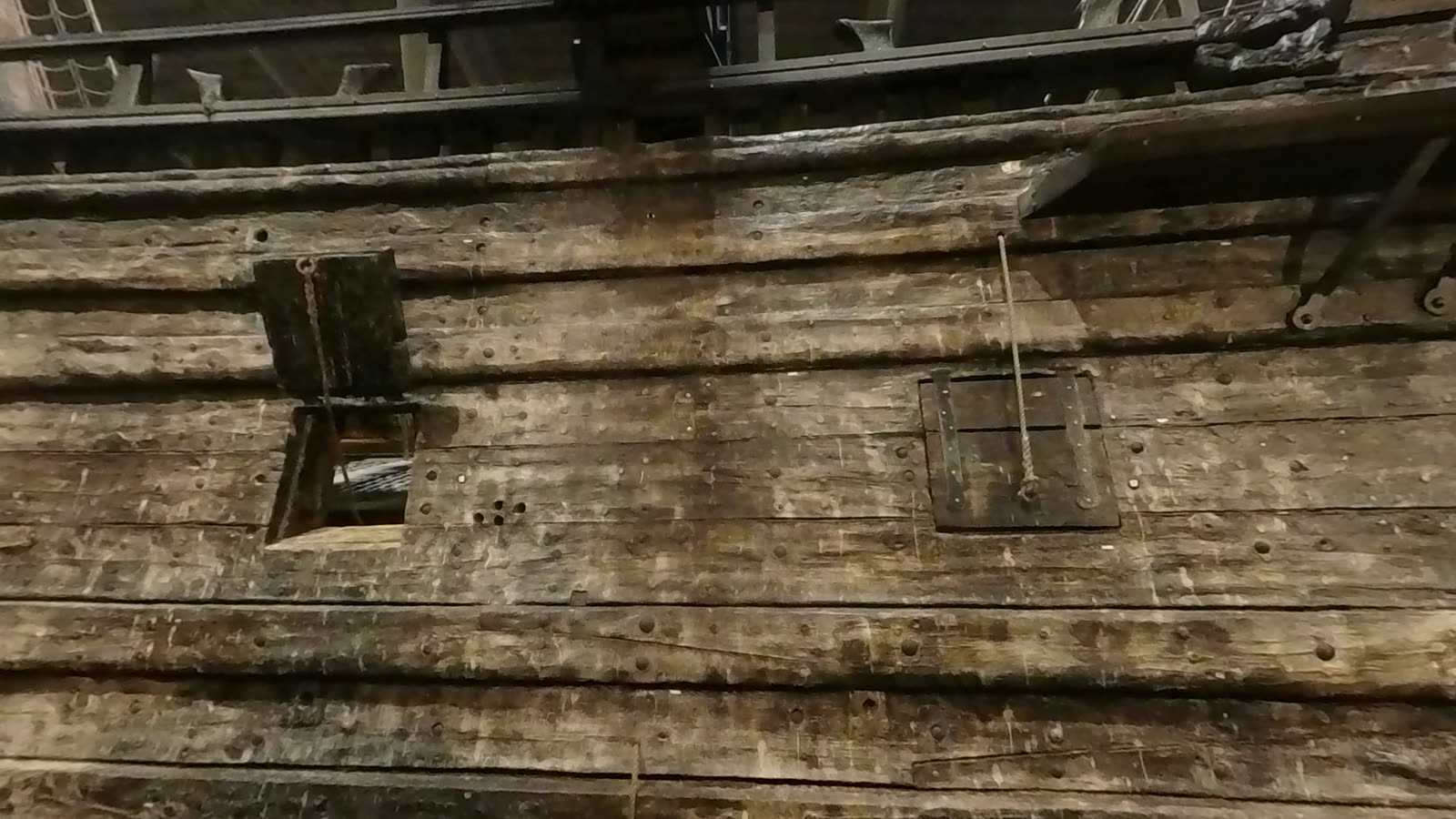
Close-up of the original timber beside the gunports.
Music: “Firebird” by Stevia Sphere, licensed under CC BY 4.0.